This is a photo gallery of some of the museums most valuable items.
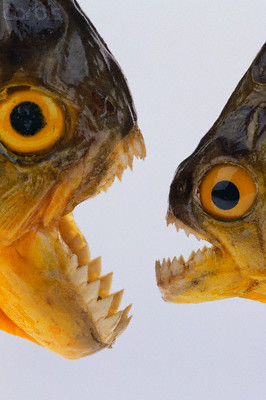
Piranhas have just about the same reputation as great white sharks in that they are man eaters. The Hollywood movie scene loves to show their worst side whenever it is appropriate. Their amazing appetite for meat is what originally gave them the bad reputation. There are many piranha fish facts that you would find extremely interesting. While many humans fear these fish, there are thousands of natives that swim in the same bodies of water with these fish and go unharmed. These two Piranhas have been dried and put in our Museum.
|  |
Geodes can form in any cavity, but the term is usually reserved for more or less rounded formations in igneous and sedimentary rocks, while the more general term '"vug"' is applied to cavities in fissures and veins. They can form in gas bubbles in igneous rocks, such as vesicles in basaltic lavas, or as in the American Midwest, rounded cavities in sedimentary formations. After rock around the cavity hardens, dissolved silicates and/or carbonates are deposited on the inside surface. Over time, this slow feed of mineral constituents from groundwater or hydrothermal solutions allows crystals to form inside the hollow chamber. Bedrock containing geodes eventually weathers and decomposes, leaving them present at the surface if they are composed of resistant material such as quartz. The museum holds different types of geodes such as amethyst, quartz and agate. Our geodes are displayed with the museum's collection of rocks and gems.
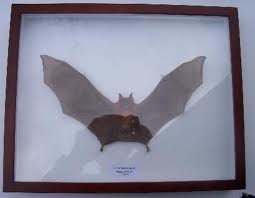
One of our most valuable perserved animals is our stuffed Horsehoe Bat. Appearance All horseshoe bats have leaf-like, horseshoe-shaped protuberances on their noses. In the related Hipposideridae, these noseleafs are leaf- or spear-like. They emit echolocation calls through these structures, which may serve to focus the sound. Their hind limbs are not well developed, so that they cannot walk on all fours; conversely, their wings are broad, making their flight particularly agile. Most rhinolophids are dull brown or reddish brown in color. They vary in size from 2.5 cm to 14 cm in head-body length, and 4 to 120 grams in weight. Ecology Rhinolophids inhabit temperate and tropical regions of southern Europe, Africa, and Asia south to northern and eastern Australia. All species are insectivorous, capturing insects in flight. Their roost habits are diverse; some species are found in large colonies in caves, some prefer hollow trees, and others sleep in the open, among the branches of trees. Members of northern populations may hibernate during the winter, while a few are known to aestivate; at least one species is migratory. Like many Vespertilionidae bats, females of some rhinolophid species mate during the fall and store the sperm over the winter, conceiving and gestating young beginning in the spring. | 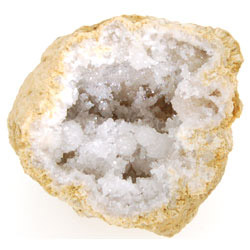 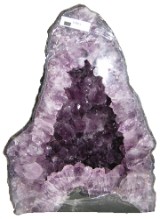  |
One more of our most valuable perserved insects is our Perserved praying mantis.
Mantodea or mantises is an order of insects that contains approximately 2,200 species in nine families worldwide in temperate and tropical habitats. Most of the species are in the family Mantidae. Historically, the term "mantid" was used to refer to any member of the order because for most of the past century, only one family was recognized within the order; technically, however, the term only refers to this one family, meaning the species in the other eight recently established families are not mantids, by definition (i.e., they are empusids, or hymenopodids, etc.), and the term "mantises" should be used when referring to the entire order.
A colloquial name for the order is "praying mantises", because of the typical "prayer-like" stance, although the term is often misspelled as "preying mantis" since mantises are predatory. The closest relatives of mantises are the orders Isoptera (termites) and Blattodea (cockroaches), and these three groups together are sometimes ranked as an order rather than a superorder. They are sometimes confused with phasmids (stick/leaf insects) and other elongated insects such as grasshoppers and crickets.

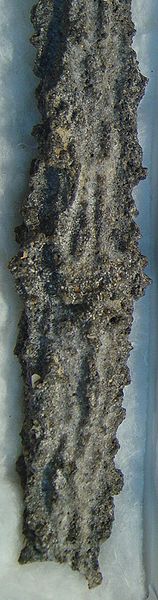
Fulgernites are natural hollow glass tubes formed in quartzose sand, or silica, or soil by lightning strikes. They are formed when lightning with a temperature of at least 1,800 °C (3,270 °F) instantaneously melts silica on a conductive surface and fuses grains together. Our fulgernite is displayed with all of the museums rocks and gems.
|  |
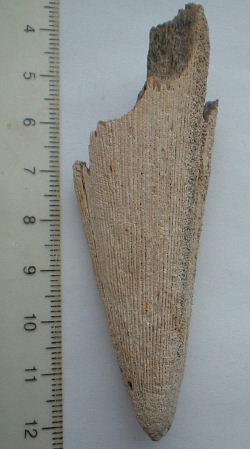
The Marlins very common to find in the Atlantic and Pacific ocean. Marlins mainly live in open ocean and their diet is on tuna and mackerel. Marlins have live for thousands of years as the fossil shows. Our marlin bill is displayed with all of the museums other fossils.
The Goliath beetles are among the largest insects on Earth, if measured in terms of size, bulk and weight. They are members of subfamily Cetoniinae, within the scarab beetle family. Goliath beetles can be found in many of Africa's tropical forests, where they feed primarily on tree sap and fruit. Little appears to be known of the larval cycle in the wild, but in captivity, Goliathus beetles have been successfully reared from egg to adult using protein-rich foods such as commercial cat and dog food. Goliath beetles measure from 60–110 millimetres (2.4–4.3 in) for males and 50–80 millimetres (2.0–3.1 in) for females, as adults, and can reach weights of up to 80–100 grams (2.8–3.5 oz) in the larval stage, though the adults are only about half this weight. The females range from a dark brown to silky white, but the males are normally brown/white/black or black/white. The museum's Goliath Beetle is displayed with the rest of the museum's bugs and insects.
|
 |

The wildlife park also has many perserved butterflies. A butterfly is a mainly day-flying insect of the order Lepidoptera, the butterflies and moths. Like other holometabolous insects, the butterfly's life cycle consists of four parts, egg, larva, pupa and adult. Most species are diurnal. Butterflies have large, often brightly coloured wings, and conspicuous, fluttering flight. Butterflies comprise the true butterflies (superfamily Papilionoidea), the skippers (superfamily Hesperioidea) and the moth-butterflies (superfamily Hedyloidea). All the many other families within the Lepidoptera are referred to as moths.
Butterflies exhibit polymorphism, mimicry and aposematism. Some, like the Monarch, will migrate over long distances. Some butterflies have evolved symbiotic and parasitic relationships with social insects such as ants. Some species are pests because in their larval stages they can damage domestic crops or trees; however, some species are agents of pollination of some plants, and caterpillars of a few butterflies (e.g., Harvesters) eat harmful insects. Culturally, butterflies are a popular motif in the visual and literary arts.
Another one of our most valuable sea shells is our Nurtilus shells. Nautiluses are the sole living cephalopods whose bony body structure is externalized as a shell. The animal can withdraw completely into its shell and close the opening with a leathery hood formed from two specially folded tentacles. The shell is coiled, aragonitic, nacreous and pressure resistant, imploding at a depth of about 800 metres (2,600 ft). The nautilus shell is composed of 2 layers: a matte white outer layer, and a striking white iridescent inner layer. The innermost portion of the shell is a pearlescent blue-gray. The osmena pearl, contrarily to its name, is not a pearl, but a jewelry product derived from this part of the shell. Internally, the shell divides into camerae (chambers), the chambered section being called the phragmocone. The divisions are defined by septa, each of which is pierced in the middle by a duct, the siphuncle. As the nautilus matures it creates new, larger camerae, and moves its growing body into the larger space, sealing the vacated chamber with a new septum. The camerae increase in number from around four at the moment of hatching to thirty or more in adults. The shell coloration also keeps the animal cryptic in the water. When seen from above, the shell is darker in color and marked with irregular stripes, which helps it blend into the dark water below. The underside is almost completely white, making the animal indistinguishable from brighter waters near the surface. This mode of camouflage is named countershading. The nautilus shell presents one of the finest natural examples of a logarithmic spiral, although it is not a golden spiral. The use of nautilus shells in art and literature is covered at nautilus shell.
One of the Wildlife Park's most rare shells is our triton shells. Triton is the common name given to a number of very large sea snails, predatory marine gastropods in the genus Charonia.The name "triton" is also often applied as part of the common name, to other, much smaller sea snails of other genera within the same family, Ranellidae.Tritons are named after the Greek god Triton, who was the son of Poseidon, god of the sea.The shell of the giant triton, which lives in the Indo-Pacific faunal zone, can grow to over half a metre (20 inches) in length.One slightly smaller but still very large species, Charonia variegata, lives in the western Atlantic, from North Carolina to Brazil

